



 Give a Gift
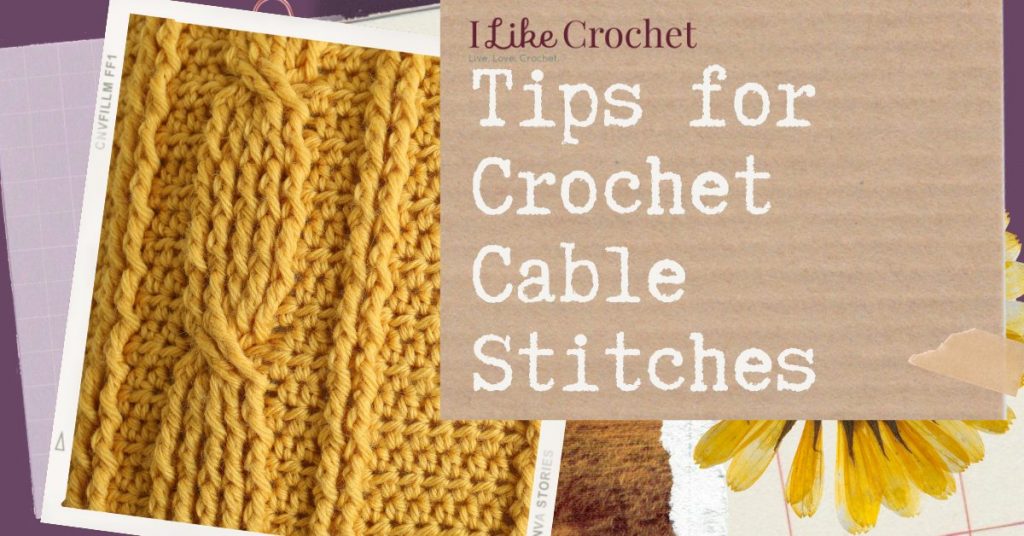
Crochet Cable Stitches: Easy Tips for Beginners
Learn how to crochet cable stitches with simple tips for practicing front and back post stitches and creating beautiful textured cables.
Hi Amber,
Cables are a beautiful way to add texture and interest to your crochet projects, but if you have never worked a cable before, the technique can feel a bit intimidating. Like you, I love the look of crochet cables. In the beginning, I was nervous to try them because of the raised twists and intricate textures.
Once I found an easy pattern and understood how the stitches weave over and under each other, though, everything started to make sense. From there, it became much easier to follow more complicated cable patterns and even create my own.

Get this special collection of 3 FREE baby blanket patterns from I Like Crochet right now!
How Do You Crochet Cable Stitches?
Learning to crochet cables is deceptively easy. Most crochet cables are created by working strands of post stitches in front of and behind each other in a specific order. These stitches create the raised, woven appearance that gives crochet cables their distinctive look.
Two important stitches used for crochet cables are the Front Post Stitch and Back Post Stitch. If you have never worked a post stitch, don’t worry. They are worked much like basic crochet stitches. The main difference is where you insert your hook.
Instead of inserting your hook through the top loops of the stitch, you work around the front or back of the stitch’s post. Working around the post pushes the stitch forward or backward, creating a prominent three-dimensional texture.
By arranging these raised stitches in different combinations, you can create the twisted and woven appearance of a crochet cable. Learning exactly where to place your hook can take a little practice, but the finished effect is well worth the effort.
Tips for Learning Crochet Cables
Here are a few tips to guide you through crochet cables and help you get over your fear of this textured technique.
- Start with a small practice piece. Try cabling on a small project that you don’t have to worry about messing up. Choose something you can easily rip back and rework as you learn the cable stitch. Projects that don’t require complicated sizing are especially helpful. Dishcloths, headbands, and pillow covers are all good options for practicing crochet cables. Starting small gives you time to understand how the stitches weave in front of and behind each other.
- Use a slightly looser gauge. A slightly looser gauge can make it easier to move your hook around the post of the stitch, especially when the pattern tells you to work in front of or behind another stitch. When working longer stitches, pull the yarn on your hook firmly before completing the next stitch. This can help prevent unwanted holes and gaps in your finished cable.
- Choose the right yarn. The right yarn can make a big difference when you’re learning how to crochet cables. Smooth, worsted-weight yarn in a solid color is a great place to start. Lightweight yarn can be fiddly, while bulky yarn may make the stitches harder to manipulate. Fuzzy or highly textured yarn can also make it difficult to see your stitches and determine where to place your hook. Dark colors can create the same problem. Variegated yarns can make beautiful cables, but save them for later when you’re more comfortable with the technique.
- Count your stitches carefully. Crochet cables often require you to skip stitches and then work back into those skipped stitches. Because of this construction, it’s easy to accidentally miss a stitch or lose your place. Count your stitches at the end of each row to make sure you are maintaining the correct stitch count.
Are Crochet Cables Hard for Beginners?
Crochet cables may look complicated, but the basic technique is very approachable once you understand how post stitches work. The raised stitches can seem intimidating at first, especially when several stitches cross over one another.
Start with a simple cable pattern and work slowly. Pay attention to which stitches are worked in front, which are worked behind, and where your hook needs to go. With practice, you’ll begin to recognize the construction of the cable instead of simply following each instruction one stitch at a time.
What Yarn Is Best for Crochet Cables?
A smooth, worsted-weight yarn in a light or medium solid color is a good choice for your first crochet cable project. This type of yarn makes the stitches easier to see and gives the raised cable texture plenty of definition.
Once you’re comfortable with the technique, experiment with different yarn weights, colors, and textures. Just remember that fuzzy, very dark, or highly variegated yarn can make individual stitches harder to see while you’re learning.
Practice Makes Perfect
With cabling, practice makes perfect. Take it one stitch and one row at a time. You don’t need to master an entire cable pattern immediately. Focus on understanding how each stitch moves in front of or behind the others.
Before long, those complicated-looking twists will start to feel much more familiar. So, now it’s your turn. Give crochet cabling a try and let us know how you’re doing. Once you’ve tried it, you’ll be hooked!
Get this special collection of 3 FREE baby blanket patterns from I Like Crochet right now!
A Beginner-Friendly Crochet Cable Project
Need help finding your first cable project? Try the Goldenrod Cabled Pillow, a simple crochet cable project that includes a video tutorial to help you follow the technique.
Watching the stitches being worked can make it much easier to understand how the cable construction comes together, especially if you’re new to front post and back post crochet stitches.
Frequently Asked Questions About Crochet Cable Stitches
How do you crochet cable stitches?
Crochet cable stitches are usually created with combinations of front post and back post stitches. The stitches are worked in a specific order so they cross over and under one another, creating the raised, woven appearance of a cable.
Are crochet cables hard for beginners?
Crochet cables can look complicated, but beginners can learn the technique by starting with a simple pattern. Practice on a small project and focus on understanding where to place your hook around each stitch post.
What stitches are used for crochet cables?
Front post and back post stitches are commonly used to create crochet cables. Different patterns combine these raised stitches in different ways to create twists, braids, and other cable designs.
What yarn is best for crochet cables?
Smooth worsted-weight yarn in a solid, easy-to-see color is a good choice for beginners. It makes the stitch structure easier to see while you learn where to place your hook.
How can I practice crochet cables?
Start with a small project such as a dishcloth, headband, or pillow cover. Choose a simple cable pattern and practice one row at a time. Counting your stitches after each row can also help you catch mistakes early.
What is the difference between front post and back post crochet?
The difference is where you insert your hook around the stitch post. A front post stitch is worked around the front of the post, while a back post stitch is worked around the back. These stitches push the texture forward or backward and are often combined to create crochet cables.
Is there a search button, to find a particular pattern
There is a search bar in the top right corner of the website.
I joined last month when will I be given access to more patterns
Hi Carol, as a Gold member you should have access to our entire pattern library! You can browse everything here: https://www.ilikecrochet.com/magazine/ Check out the Topics on the right to browse by pattern type. Enjoy! -Dana, Editor
Thank you for the great video on how to do the cable stitch! It was easy to follow and now I’m not afraid to try it.
Vous me faites plaisir en me montrant des points qui sortent des models standards.
Merci JI